


AGEING SOCIETIES AND THE FUTURE OF CARE IN ASIA AND THE PACIFIC
Ageing societies and the future of care in Asia and the Pacific
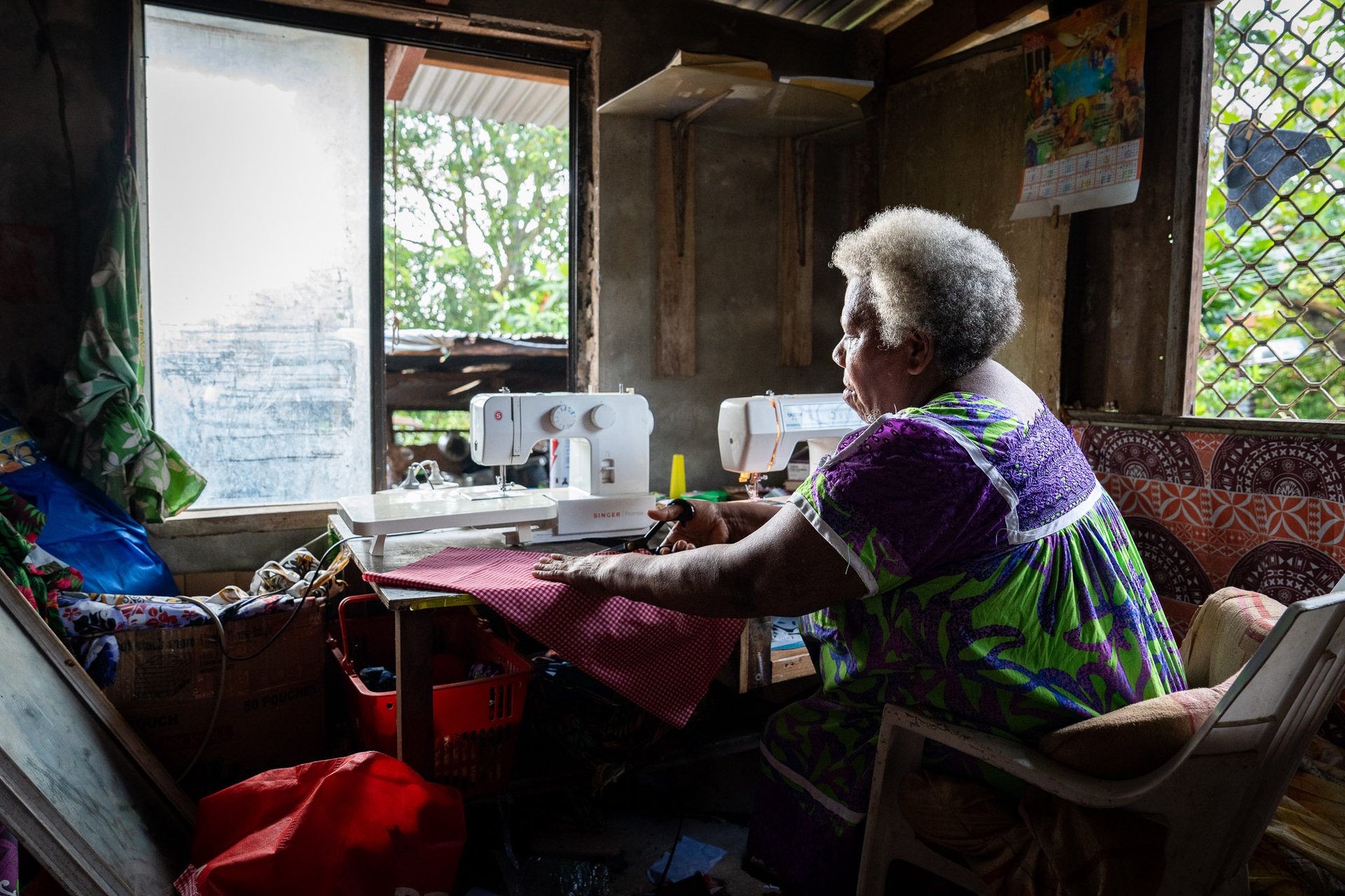
The Pacific island region is often characterised by its youthful population, but gradual demographic change is underway. Populations are gradually growing older, creating new opportunities and challenges for governments, communities and social protection systems.
A recent socialprotection.org podcast, Ageing Societies and the Future of Care in Asia and the Pacific, explored what these demographic shifts mean for the future of care, income security and social protection.
Demographics are shaping the future
As populations age, countries must adapt their policies and systems to meet changing needs.
“Demographics influence and shape the economic and social destinies of countries,” said Philip O’Keefe, Professor of Practice at the Centre for Population Ageing Research at the University of New South Wales. “At the same time, they're not set in stone.”
“So, there's a big role for policy and behavioural change in how societies react and adapt to the demographics.”
Across the Pacific, the pace of ageing varies significantly.
“Compared to most Asian countries, the ageing transition in the Pacific has been more gradual and it's also been delayed,” explained Jesse Doyle, Senior Social Protection Specialist at P4SP.
“There’s quite a bit of variation across and even within the sub-regions.”
Polynesian countries are the most advanced in the ageing transition, while many Melanesian countries remain relatively young.
Doyle noted that many Pacific countries continue to prioritise investments in education and skills given they have more working-age people than non-working-age people.
In addition, governments have made progress in supporting older people.
“Pacific countries have done a remarkable job of investing and setting up old age pension programs,” Doyle said, noting that formal programs sit alongside strong family and community support systems.
Fiji’s approach to supporting to elderly
Fiji’s experience shows how social protection systems can evolve to support ageing populations.
“Fiji adopts a lifecycle approach to social protection, which includes supporting income security and wellbeing of vulnerable groups, from children, women, persons with disability, and also including the older persons,” said Rozia Bi, National Coordinator – Social Protection Reforms at Fiji’s Ministry of Women, Children and Social Protection.
Over the past decade, Fiji has increased government investment in social assistance schemes, growing from less than 0.4% of GDP in 2017 to 1.12% of GDP in 2026.
As a part of this investment, Fiji has progressively expanded its elderly benefit (the Social Pension Scheme) by lowering the eligibility age and increasing benefit levels.
“It started in 2013 with the age of 70 and the allowance at that time was FJD 30 per month,” Bi explained. “Over the years, the age was lowered to 68, then to 66 and 65 now, with a maximum allowance of FJD 157 per month, which includes a transport assistance scheme as well.”
Reducing poverty and supporting families
Evidence from Fiji highlights the positive impacts of social pensions on older people and their households.
“A recent review conducted by the ministry’s Poverty Monitoring Unit included interviews with over 1,300 social pension recipients across Fiji and demonstrated that more than 50% of these recipients are actually the sole income earners in their households,” said Bi.
“The pension isn't just supporting older people. It's helping sustain entire families as a critical income support.”
The review found pension payments are used primarily to meet essential needs, including food, healthcare and social obligations.
“It is making a practical difference to the standard of living for Fiji’s older persons,” Bi said.
Family support remains the foundation of care in Fiji and across much of the Pacific.
“The government's role is to support and strengthen families in this caregiving role,” Bi explained.
“Programs such as the Social Pension Scheme provide a basic and reliable income for older persons, helping reduce the financial pressure on households and providing them with more autonomy.”
Social protection and shock response
Many of the Pacific countries are among the most shock-exposed countries globally.
“So, there’s been a massive push towards adaptive and shock-responsive social protection over the past decade,” Doyle noted.
Universal social pensions are increasingly being used as channels for delivering temporary top-up payments during shocks, often with support from development partners.
In Fiji, existing pension systems enabled rapid support during cyclones, the COVID-19 pandemic and recent cost-of-living pressures.
“Since the platform was already available, existing social protection programs were used to reach these older people and their households directly,” said Bi.
“The social pension has proven to be a very strong and reliable platform during crisis.”
Building pension systems for the future
For countries looking to expand support for older people, Doyle highlighted the importance of gradual, fiscally sustainable growth.
“You want to start small and gradually increase coverage rates in a fiscally measured way,” he said.
Many Pacific countries have followed this path by first establishing contributory provident funds for formal sector workers before introducing social pensions and gradually increasing benefit levels.
Doyle outlined other design options such as indexing benefits (so they don’t erode in real terms), considering a tiered benefit level based on needs, and introducing a pension testing requirement.
For contributory schemes, Doyle highlighted the need to address coverage gaps, particularly for informal workers.
“A simple way to do that is bringing in some of those groups that might otherwise be excluded by design,” he said. “Open up those windows for contributions from informal workers.”
As populations age gradually across the Pacific, governments face important decisions about how to adapt social protection systems and support existing care networks for the future.
The podcast emphasised that successful responses will require long-term planning and investment, complementing existing systems and ensuring older people age with dignity.
---
Listen to the full podcast: Ep. 61 | Ageing Societies and the Future of Care in Asia and the Pacific | Social Inclusion Series Part II | Social Protection